


Introduction to Helium-3 Neutron Detectors


View full specifications (PDF)

Features

  • A 35 year expertise
  • Trade marks: Dextray®, LMT, Thomson CSF, LCC, Xeram, Transcal, Eurisys Mesures, CANBERRA Eurisys
  • Wide product range
  • Patented rectangular sections for time-of-flight measurements in neutron scattering
  • Dedicated amplifiers for characteristic optimization (charge and current amplifiers)
  • For nuclear material control and neutron scattering
  • Charge amplifiers for neutron scattering
  • Many references in France, Germany, United States and Japan

Description

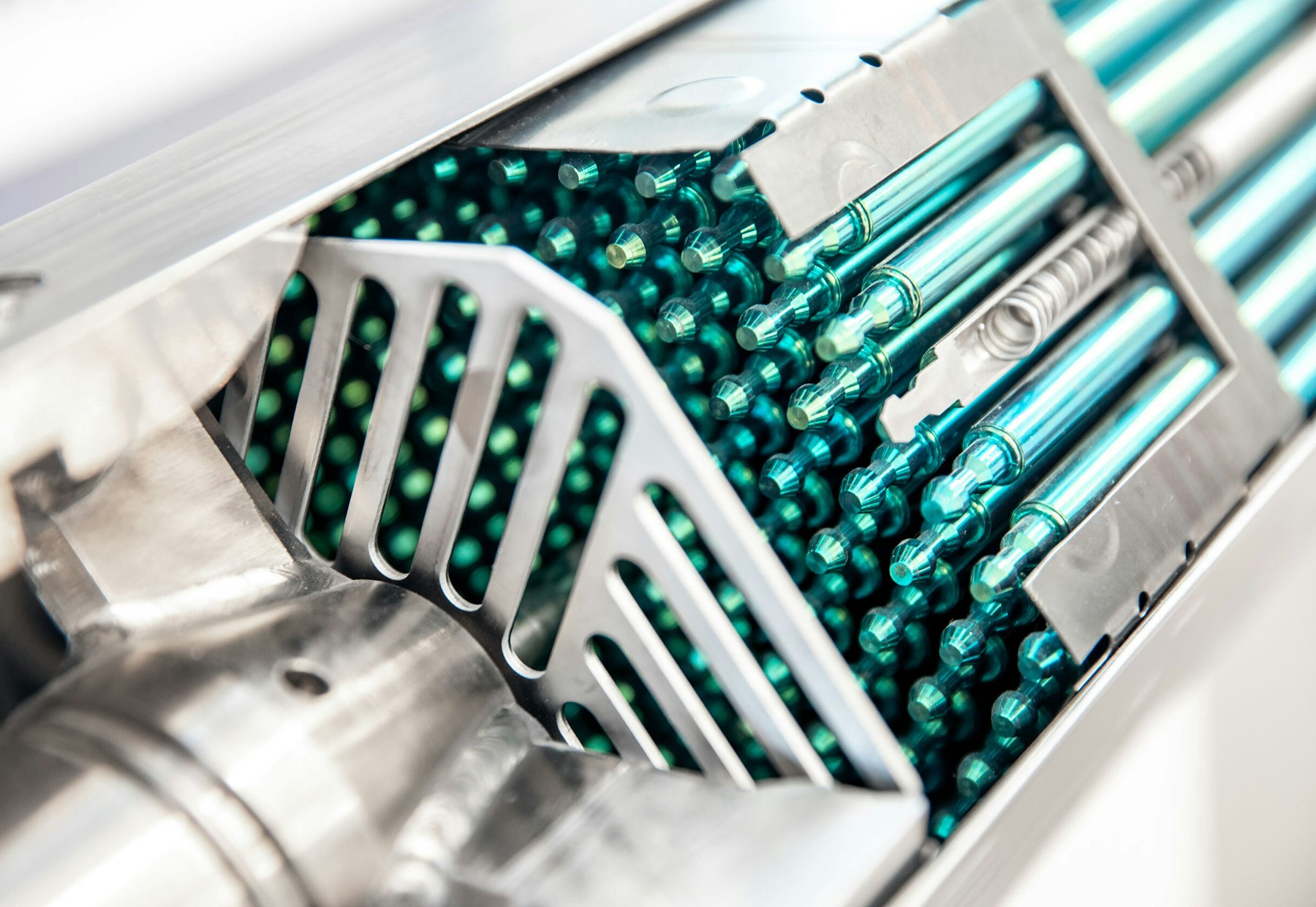
Helium-detectors - Diameters 1 - 2.5 - 5 cm and rectangular squashedThe first helium-3 Dextray® detectors were developed in 1970. They were marketed successively under LMT, Thomson CSF, LCC, Xeram, Transcal, Eurisys Mesures and now CANBERRA trade marks.

For over more than 30 years of expertise in the neutron measurement area, the detector range has progressively diversified and enriched to meet the market requirements, in particular for neutron scattering experiments and nuclear material measurements.

The merge of Dextray® Helium-3 detectors with the Systems and Health Physics products of Eurisys Mesures and CANBERRA has lead to an important synergy within our company: as manufacturers and users of detectors for our systems and products.

The high level of performances and the detector reliability, widely acknowleged by a large number of users, together with a commercial policy based on the Customer Service concept gave us access to a major world market share: several ten thousand detectors working for many years worldwide, in particular in Europe, United States and Japan.

MAIN APPLICATIONS
Time-of-Flight spectrometer - NIST Washington 1 000 flat section detectors with amplifiersResearch of the matter structure by neutron scattering and Time-of-Flight measurements in nuclear research reactors and neutron spallation sources.

Nuclear material measurements (plutonium and fissile materials), in nuclear fuel factories (Safeguard measurements, access and exit control, material assessment), in harbours, airports, (homeland security) and waste barrels (waste storage management).

Neutron ambient measurements (rem-counters) for radiation protection within reactors and nuclear power plants, nuclear industry and medical domain.

Various industrial measurements: soil humidity, oil prospection, etc.

Symene system for measurementMAIN REFERENCES
The CANBERRA Helium-3 detectors have been qualified by many international research organizations and nuclear industries (see hereunder).

DEVELOPMENTS
During more than 10 years of expertise in the neutron measurement domain, the detector range has progressively diversified and enriched to meet the market requirements, in particular for neutron scattering experiments and nuclear material measurements.

For example, the squashed detectors, patented in 1978, have permitted to enhance the Time-of-Flight measurement accuracy in neutron scattering experiments.

Specialized low-cost charge amplifiers have then permitted the optimization of neutron detection together with system operation in severe environment (nuclear material measurements within fuel cycle factories by active and passive neutron measurement).

More recently, new gas mixes, with addition of tetrafluoromethane, have been introduced to increase the detector rapidity and thus to improve the Time-of-Flight measurement accuracy in neutron scattering experiments.

For dedicated equipments or specific needs, our specialists remain at your disposal for studying new solutions leading to a better customer satisfaction.

Country Research Center Nuclear Industry
France ILL (Laue Langevin Institute), High Flux Reactor, Grenoble (large majority of unit detectors, several thousands) LLB (Léon Brillouin Laboratory), Orphee reactor, Saclay (1 000 detectors) CEA (French Atomic Energy Commission), COGEMA, Reprocessing plants of La Hague (several thousand detectors), Marcoule, Cadarache
Europe PSI (Paul Scherrer Institute), SINQ reactor, Villigen, Switzerland (600),
HMI (Hahn Meitner Institute), BER2 reactor, BENSC Berlin, Germany (1 000 detectors)
Technical University, Munich, FRM-II reactor at Garching (800 detectors)
CLRC, ISIS Spallation Source, Rutherford, UK (600 detectors)
EURATOM Luxembourg, Mol, Ispra,
Karlsruhe (1 000 detectors)
IAEA Vienne
BNFL Sellafield
IPPE Obninsk (Russia)
Eurisys Mesures and CANBERRA systems
(1 000 detectors)
USA NIST (National Institute of Standards and Technology),
NRCN reactor, Gaithersburg, USA (1 000 détectors and amplifiers)
DOE
CANBERRA systems
Asia JAERI, Tokyo University, Tohoku University, Kyoto University,
KEK Japan (1 000 detectors)
NUCEF
JAERI.

View full specifications (PDF)

Top of Page


Product Inquiry / Request

In the United States
(800) 243-3955

Outside United States:
(203) 238-2351

Reference Material